Why visit Spiti Valley
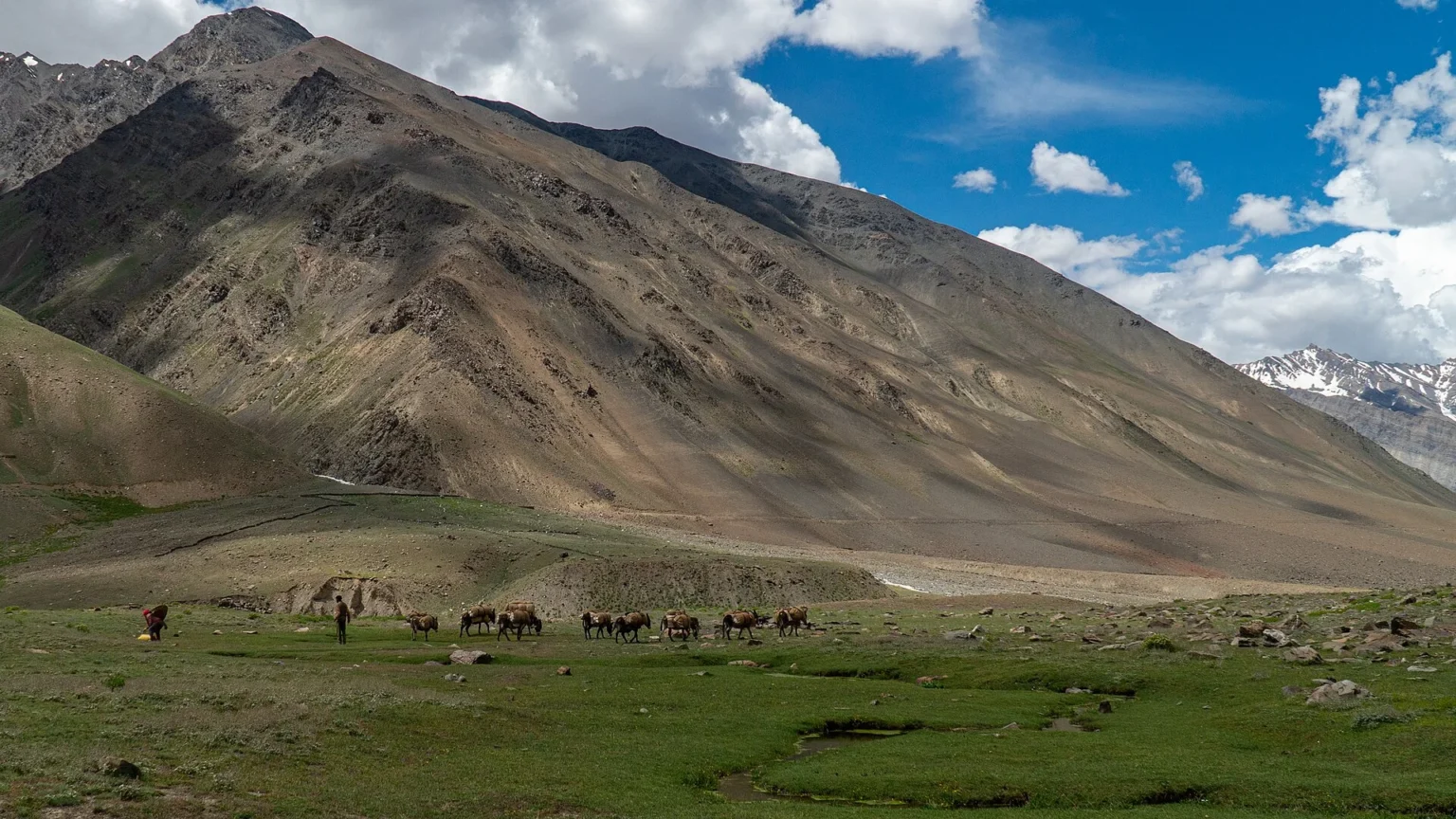
Spiti is a cold desert valley in the rain shadow of the Himalayas, close to the border with Tibet. Instead of pine forests you see bare brown mountains, turquoise rivers and white monasteries perched on cliffs. The people are mostly Buddhist, and life here follows the short summer, when the fields turn green and the roads open.
It is not a place to rush. The roads are rough, the air is thin and the distances are long, but that is what keeps Spiti special. Travellers who come with time and patience usually say it was the highlight of their Himachal trip.
Best time to visit Spiti
- June to September: the main season. Both routes are usually open, the weather is mild by day and the high villages and Chandratal are accessible.
- Late September and October: clear skies and golden colours, but nights get very cold and the Kunzum Pass road can close with the first snow.
- November to May: only the Shimla and Kinnaur route stays open, and even that can close after heavy snow. Winter Spiti is beautiful but needs careful planning and an experienced driver.
Because Spiti sits in a rain shadow, it gets little monsoon rain. That is why July and August are popular, though the roads leading to it, especially through Kinnaur, can still be hit by landslides.
How to reach Spiti Valley
Via Manali and Kunzum Pass
The shorter route, about 200 km from Manali to Kaza, goes through the Atal Tunnel and over Kunzum Pass at about 4,550 m. It usually opens around mid-June and closes in October. The road is rough in places, so expect 8 to 10 hours.
Via Shimla and Kinnaur
The longer route, roughly 420 km from Shimla to Kaza, follows the Sutlej through Kinnaur and is open for most of the year. Plan it over at least two or three days, with nights in Sangla or Kalpa and Tabo. This also helps your body adjust to the altitude gradually.
Our suggestion: for a full circuit, go in through Shimla and Kinnaur and come out through Kunzum Pass and Manali. Climbing slowly is the best protection against altitude sickness.
Top places to visit in Spiti
Key Monastery
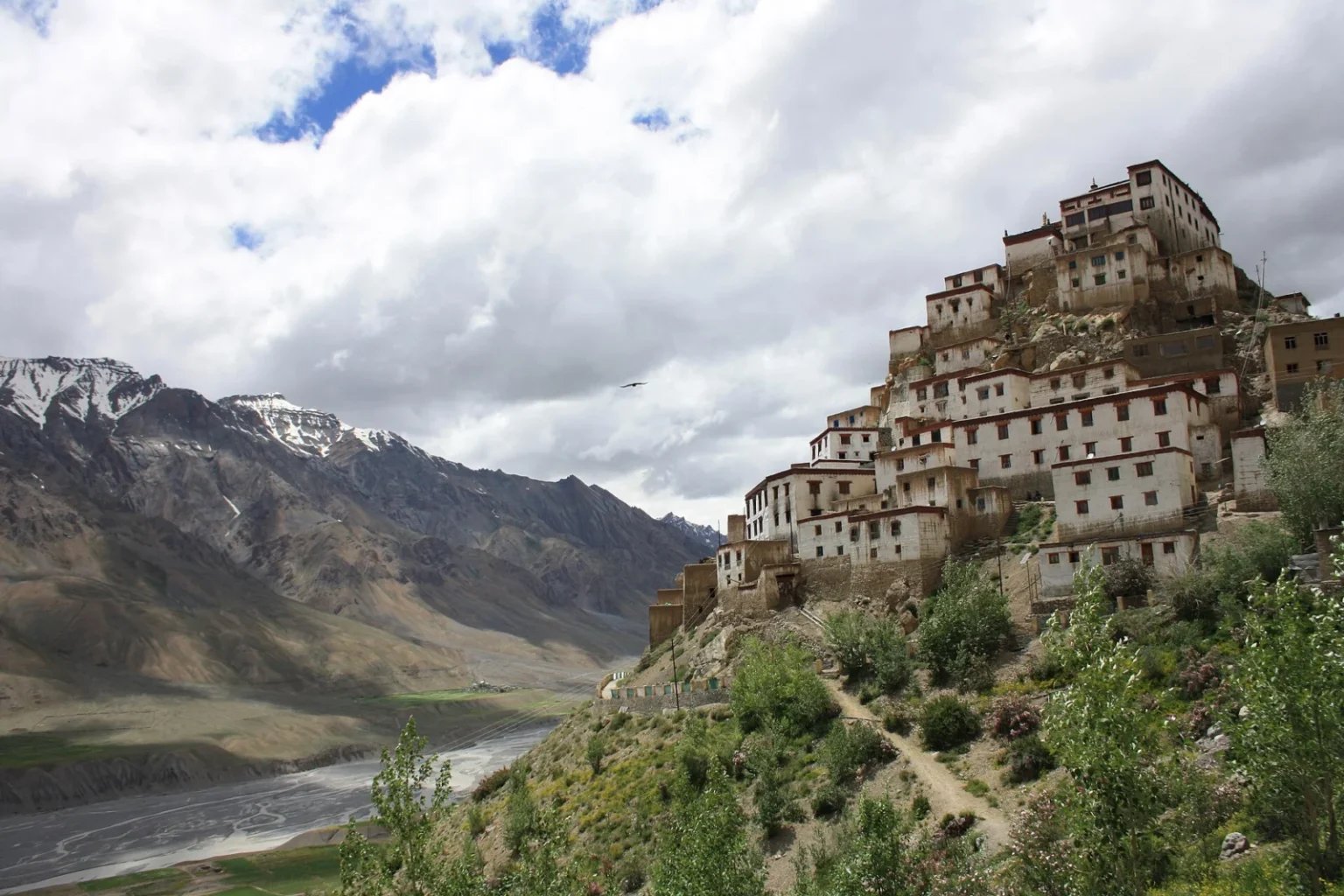
The largest monastery in Spiti stands on a cone-shaped hill above the river, about 14 km from Kaza. Monks live and study here, and visitors are welcome in the prayer halls.
Tabo Monastery
Founded in 996 AD, Tabo is one of the oldest continuously working Buddhist monasteries in the Himalayas. Its mud-walled halls hold remarkable murals and statues.
Dhankar
The old fort-monastery of Dhankar clings to a ridge above the meeting of the Spiti and Pin rivers. A steep walk leads to the small Dhankar lake above it.
Langza, Hikkim and Komic
These high villages, all above 4,000 m, are an easy loop from Kaza. Langza has a large Buddha statue and fossil-rich slopes, Hikkim has one of the highest post offices in the world, and Komic is one of the highest villages connected by road.
Kibber and Chicham bridge
Kibber is a whitewashed village on the edge of a wildlife sanctuary, and the nearby Chicham bridge crosses a dizzying gorge. In winter, Kibber is a base for snow leopard spotting trips.
Pin Valley
Greener and quieter than the main valley, Pin Valley National Park is home to ibex and snow leopards. Mud village is the last stop on the road.
Chandratal
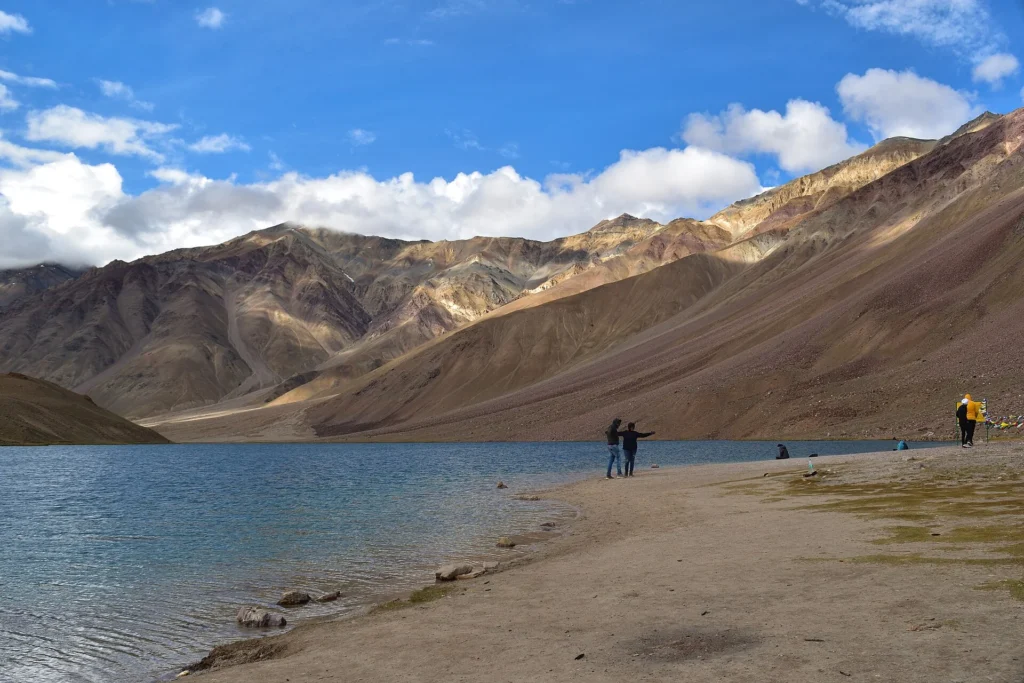
The crescent-shaped moon lake sits at about 4,300 m near Kunzum Pass. Camps are set up a few kilometres away in summer, and a short walk takes you to the shore. Visit when the road is open, usually June to September.
Things to do in Spiti
- Stay in a village homestay and share a meal with a local family
- Watch the night sky. With almost no light pollution, the Milky Way is easy to see
- Attend morning prayers at Key or Tabo monastery
- Look for fossils around Langza, but leave them where they are
- Send a postcard from Hikkim
How many days do you need for Spiti?
A short trip from Manali takes at least 5 to 6 days. A full circuit through Kinnaur and Spiti needs 8 to 10 days. Do not try to cover it in less. Long hours at high altitude with no rest day are the most common reason travellers fall ill.
Where to stay in Spiti
Kaza has the most hotels and guesthouses, along with ATMs, petrol and basic medical care. Tabo, Langza, Kibber and Dhankar have simple homestays that give a real feel for village life. Near Chandratal, accommodation is in seasonal camps. Expect clean but basic rooms, limited hot water and power cuts.
Spiti Valley tour packages
Spiti Valley Tour Package
- High-altitude landscapes
- Key Monastery
- Kaza
- Scenic valleys
Starting from₹15,999*
*Starting prices may vary according to travel dates, hotel category, vehicle type, season and availability.
Travel tips for Spiti
- Spend your first night at a lower altitude and keep the first day easy.
- Drink plenty of water and avoid alcohol for the first couple of days.
- Carry cash. ATMs are only in a few places and often run out.
- Mobile network is limited, mostly in Kaza. Tell family your plan in advance.
- Pack warm layers in every season. Nights are cold even in July.
- Foreign nationals may need a permit for parts of the Kinnaur route. We can help arrange it.
Spiti Valley FAQs
Which route is better, Manali or Shimla?
The Shimla and Kinnaur route is longer but lets you gain altitude slowly and is open for most of the year. The Manali route is faster but climbs quickly and is only open from about mid-June to October. Doing one each way gives you the best of both.
Is Spiti safe for families and older travellers?
Yes, with good planning. Choose the Shimla route for gradual acclimatisation, keep rest days, and speak to a doctor first if anyone has heart or lung conditions.
Can I visit Spiti in winter?
Yes, via Shimla and Kinnaur. Temperatures drop well below freezing, many guesthouses close and roads can shut after snowfall, so it needs an experienced local team.
Do I need a permit for Spiti?
Indian citizens do not need a permit for the main Spiti circuit. Foreign nationals need an inner line permit for some stretches near the border, which can be arranged in Shimla, Kaza or Rekong Peo.